
Juneteenth Didn’t Enter Public Life by Accident
Commemorations survive through community, but they gain civic force through recognition. Al Edwards understood that, and his 1979 bill made Texas the first state to officially honor Juneteenth—changing the trajectory of public memory.
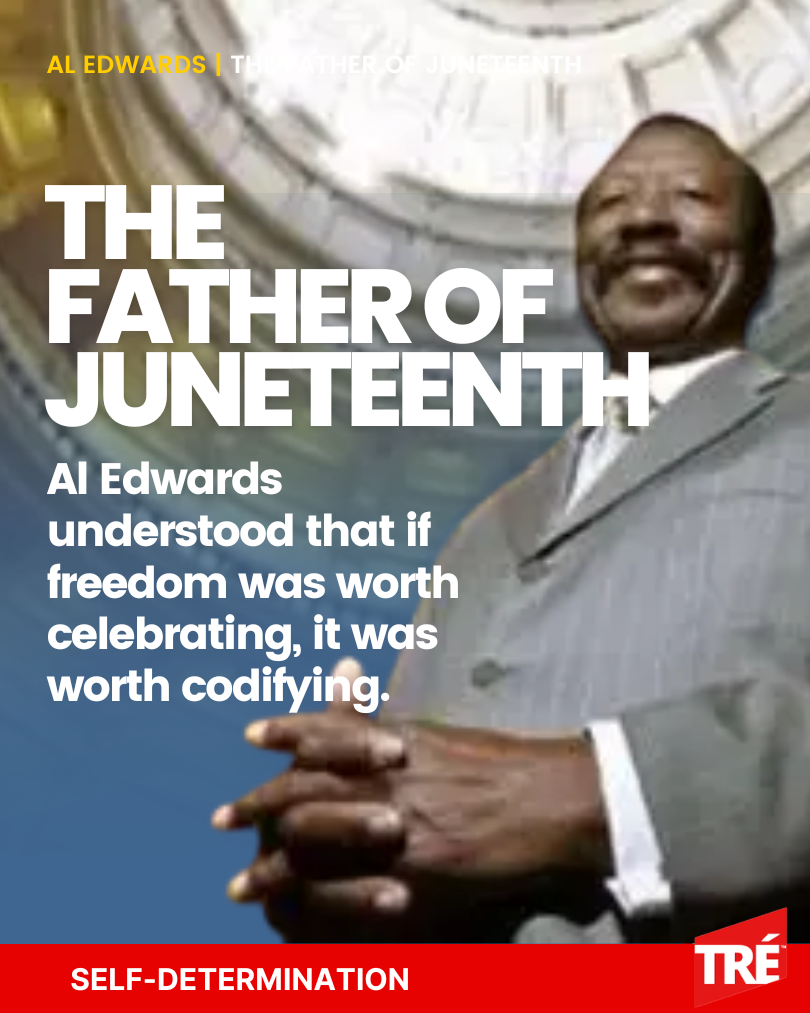
Freedom Needed More Than Remembrance
Juneteenth was meaningful long before any government gave it official standing. Families, churches, neighborhoods, and communities kept its story alive across generations. But public memory does not automatically become public policy. That took someone willing to act inside the system. In Texas, that person was State Representative Al Edwards of Houston.
In 1979, Edwards authored the bill that made Texas the first state to officially recognize Juneteenth as a state holiday. It was a landmark step, and it earned him the fitting title “Father of Juneteenth.” The nickname matters because it captures his role clearly: not as the creator of Juneteenth, but as the lawmaker who helped secure its formal place in civic life.
Why Official Status Changes Everything
There is a tendency to dismiss official recognition as merely ceremonial. That misses the point. Ceremonies shape what societies value. Holidays influence education, media coverage, institutional participation, and collective awareness. When a state recognizes a historical milestone, it signals that the event belongs to the public story.
Edwards’ bill did exactly that. It told Texans that the delayed arrival of freedom to enslaved people in Texas was not a side note. It was a defining chapter worth honoring together. That decision gave Juneteenth a stronger foundation in public life and helped move it toward broader visibility.
Al Edwards understood that if freedom was worth celebrating, it was worth codifying.
The Global Echo of a Statehouse Victory
What makes Edwards’ legacy especially powerful is how far its themes now reach. The values connected to Juneteenth—justice, dignity, liberation, and celebration—have become part of a wider global vocabulary. That is why it makes sense to see his work reflected in messages like FIFA’s “Football Unites the World.”
No, a Texas legislative bill and a global sports slogan are not the same thing. But they speak to related ideas. Both suggest that public gatherings can do more than entertain. They can express shared values. They can affirm belonging. They can tell the world what deserves to be celebrated.
A Reminder About Where Change Begins
Too often, we assume meaningful historical change comes only from national leaders or major institutions. Edwards’ story is a corrective. A Houston representative in the Texas Legislature helped shape a worldwide conversation simply by insisting that an overlooked chapter of history deserved legal recognition.
- Al Edwards represented Houston in the Texas Legislature.
- He authored the 1979 Juneteenth holiday bill.
- Texas became the first state to officially recognize Juneteenth.
- His legacy aligns with global messages of unity and celebration.
Juneteenth did not enter public life by accident. It entered because communities preserved it and because lawmakers like Al Edwards were willing to translate memory into policy. That is how history moves—from lived experience, to public recognition, to a larger conversation that eventually reaches the world.
You might also like
Connected to this story- Next →Article: Pro & College SportsPresident Obama Makes Surprise Appearance for WNBA All-Star Players, Coaches, and Changemaker StudentsSame category · Pro & College SportsRead →
- Article: Pro & College SportsStephanie Coleman Brings a Public Health Lens to Houston’s StrategySame category · Pro & College SportsRead →
- Article: Pro & College SportsEmancipation Park Shows How Communities Build Public Space When History Leaves Them OutSame category · Pro & College SportsRead →
- Article: Pro & College SportsWhy FIFA’s 2026 Unity Campaigns Resonate So Strongly in HoustonSame category · Pro & College SportsRead →
More from @tre-staff
- Article: Politics & PolicyWorshipful Sir Colonel Dr. Laurent Khaiat Brings International Civic Leadership to Global Peace Summit 20262026-10-30
- Article: Heritage & IdentityFrom Louisiana’s “Good Darky” Statue to the Million Man March: Who Defines Black Manhood?2026-10-18
- Article: Politics & PolicyGlobal Peace Summit 2026 Brings International Leaders to Manhattan During UNGA Week2026-10-03
Latest from Tré
- Article: Politics & PolicyWorshipful Sir Colonel Dr. Laurent Khaiat Brings International Civic Leadership to Global Peace Summit 20262026-10-30
- Article: Heritage & IdentityFrom Louisiana’s “Good Darky” Statue to the Million Man March: Who Defines Black Manhood?2026-10-18
Comments 0